6 min read· 9 reads
The Role of Artificial Intelligence in the Software Industry: The Future of Software Development
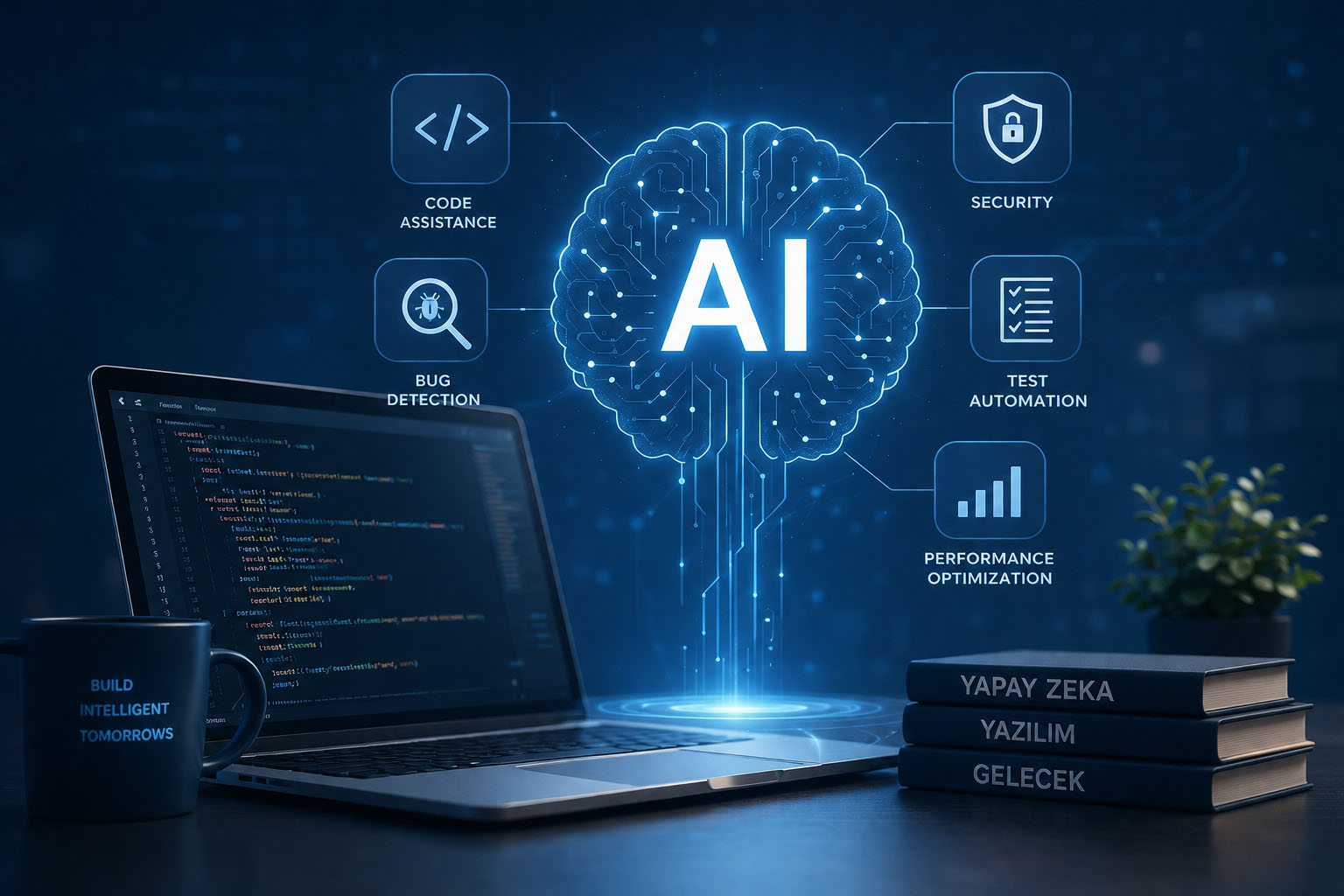
Artificial intelligence is transforming the software industry in areas such as code development, test automation, cybersecurity, and data analysis. In this article, explore the impact of AI on software development processes, its advantages, and its future role.
The Role of Artificial Intelligence in the Software Industry: A Transformation Shaping the Future
The software industry has been one of the fastest-evolving fields over the past three decades. While innovations like cloud computing, mobile technologies, big data, and the Internet of Things (IoT) have continuously reshaped the sector, Artificial Intelligence (AI) stands at the center of this transformation today. AI is no longer just a subject of research laboratories; it has become an integral part of daily software development workflows.
What exactly is the role of AI in the software industry? Will AI replace software developers, or will it serve as a powerful assistant enabling them to work more productively? The answers to these questions carry immense importance for both technology companies and professionals looking to steer their software careers.
In this article, we will examine in detail the impact of AI on software development processes, the advantages it provides to companies, potential risks, and the technological transformation that awaits us in the future.
How AI is Changing the Software World
In the past, the software development lifecycle was largely manual. Phases such as requirements analysis, design, coding, testing, and maintenance relied entirely on the knowledge and experience of developer teams. Today, AI-powered tools accelerate many of these processes.
For instance, in modern development environments, AI can:
-
Offer code suggestions,
-
Automatically generate repetitive code blocks,
-
Identify potential bugs right at the writing stage,
-
Analyze code quality,
-
Generate documentation,
-
Create test scenarios.
Consequently, developers can dedicate most of their time to business logic, user experience, and innovative solutions rather than routine operations. In this context, AI positions itself not as a "replacement" technology, but as an assistant that boosts productivity.
AI-Assisted Code Development
Generative AI models developed in recent years have significantly altered the understanding of software development. Today, many developers leverage AI-backed tools for operations like code completion and error analysis.
These tools can:
-
Generate code snippets,
-
Prepare SQL queries,
-
Produce API examples,
-
Write regular expressions (Regex),
-
Optimize algorithms,
-
Modernize legacy code to meet contemporary standards.
However, the critical point is this: AI provides recommendations, but the developer makes the final decision. Experienced software engineers do not just write functioning code; they also evaluate aspects such as security, scalability, performance, and sustainability. Therefore, AI should be viewed as a technology that supports expertise rather than replacing it.
Artificial Intelligence in Software Testing Processes
Another phase in a software project that is just as vital as development is the testing process. Carrying bugs over to the production environment increases costs and negatively impacts user satisfaction.
AI-powered testing systems can:
-
Generate automated test scenarios,
-
Simulate user behavior,
-
Identify performance bottlenecks,
-
Accelerate regression testing,
-
Analyze potential security vulnerabilities.
Thanks to this approach, quality assurance (QA) teams can execute more comprehensive tests in shorter periods.
The Importance of AI in Cybersecurity
Along with the growth of the software sector, cyber threats are increasing rapidly. Traditional security solutions can occasionally fall short when analyzing millions of data records in real time.
AI, on the other hand, can:
-
Detect anomalous network traffic,
-
Analyze suspicious user behavior,
-
Identify malware at an earlier stage,
-
Classify phishing attempts,
-
Enable faster responses to security incidents.
For this reason, AI-based security systems have begun to become a standard in many enterprise software projects today.
Advantages of AI for Software Companies
Artificial intelligence delivers significant contributions not only to developers but to entire organizations.
-
Faster Product Development: The automation of repetitive tasks helps projects reach completion in less time.
-
Lower Costs: Time savings and process optimization can reduce overall development costs.
-
Higher Quality Software: Early bug detection and automated testing processes elevate product quality.
-
Stronger Data Analysis: AI makes it easier to understand user behavior by analyzing massive datasets.
-
Enhanced Customer Experience: Intelligent recommendation systems, personalized content, and chatbots can boost customer satisfaction.
AI and Software Engineering
Software engineering does not consist solely of writing code. It encompasses many different disciplines, such as requirements analysis, system architecture, performance optimization, security, and maintenance.
AI can assist in these processes; however, human expertise remains the deciding factor in the following areas:
-
Designing system architecture
-
Modeling business rules
-
Ethical evaluations
-
Security policies
-
User experience (UX) design
-
Strategic technology selection
Thus, the successful software engineers of the future will be those who use AI tools effectively while maintaining strong problem-solving skills.
Will AI Replace Software Developers?
This question ranks among the most debated topics in the tech world. The realistic assessment is as follows:
AI can automate certain routine tasks. However, understanding complex business workflows, analyzing customer needs, designing reliable software architectures, and making critical decisions still demand human expertise.
Therefore, the individuals who will gain an advantage in the future are developers who:
-
Use AI efficiently,
-
Commit to continuous learning,
-
Understand software architecture,
-
Possess deep knowledge of security,
-
Solve business problems using technology.
The Software World of the Future
In the coming years, the following technologies are expected to become more prevalent:
-
AI-powered code editors
-
Autonomous software agents
-
Low-code platforms
-
No-code solutions
-
Smart testing systems
-
AI-driven DevOps processes
-
Predictive maintenance systems
While these advancements make the software industry more efficient, they will elevate the role of developers to a more strategic position.
Tips for Utilizing AI Successfully in the Software Industry
Companies aiming to extract maximum efficiency from artificial intelligence should consider the following points:
-
AI outputs must always be verified by expert developers.
-
Data security and privacy policies must be strictly observed.
-
A balanced approach between automation and human oversight must be maintained.
-
Software teams must receive regular training regarding AI tools.
-
Principles of ethical use must become a core part of corporate culture.
Conclusion
Artificial intelligence is not a temporary trend in the software industry; it is one of the fundamental elements of a permanent transformation. It offers major advantages across numerous areas, from code production to testing processes, and from cybersecurity to customer experience.
Yet, the foundation of successful projects still relies on experienced software teams, accurate analysis processes, and robust engineering approaches. When AI is evaluated as a powerful technology that accelerates and supports this lifecycle, it opens up substantial opportunities for both developers and businesses.
Frequently Asked Questions
Will AI completely replace software developers?
No. While AI automates repetitive tasks, architectural design, security, business analysis, and strategic decisions will continue to require human expertise.
How does AI speed up software development?
It can shorten development cycles through code suggestions, automated testing, error analysis, documentation generation, and workflow automation.
In which software domains is AI utilized?
It is utilized across a vast range of fields, primarily including web development, mobile applications, data analytics, machine learning, cybersecurity, cloud computing, DevOps, and test automation.